

NC Advocacy
2026 Legislative Priorities
The North Carolina Obstetrical & Gynecological Society (NCOGS) and the NC Section of the American College of Obstetricians and Gynecologists (ACOG) represent the voices of more than a thousand North Carolina OB-GYN clinicians and their patients.
North Carolina has among the highest rates of maternal mortality and morbidity in the United States. This problem is particularly acute among women of color, poor women, and women in the state’s rural communities.
The Society’s and NC ACOG’s priorities for the 2026 legislative session include the following investments and policy recommendations to reduce maternal mortality and morbidity.
Improving neonatal levels of care and embracing maternal levels of care
CDC data suggest that the large majority of maternal deaths may be preventable. Ensuring that at-risk mothers receive care at health care centers with the resources to prevent avoidable deaths can help reduce maternal and infant mortality. Toward this goal, a wide variety of stakeholders devoted to improving NC’s maternal and neonatal healthcare system – including NC DHHS, the NC Institute of Medicine, and NCOGS – have recommended that North Carolina join at least 17 other states in adopting national maternal and infant risk-appropriate levels of care standards. Lawmakers can begin this effort by providing NC DHHS with funds to begin the rulemaking process for their implementation. Estimated cost $500,000 non-recurring.
Improving assistance for pregnant women with substance use disorder (SUD)
In recent years, perinatal substance use and overdose deaths have become the leading causes of pregnancy-related mortality. The General Assembly can help address this challenge by providing core funding for the state’s Perinatal Substance Use Disorder Network, which provides treatment and services across the state (see attachment for more information). $2 million non-recurring.
Protect Medicaid Eligibility and Access
Medicaid improves the health and lives of patients throughout their lifetimes. Notably, two out of three women covered by Medicaid are of reproductive age. Thanks to Medicaid coverage, people are able to receive preventive care and screenings that keep them healthier, improve health outcomes, and reduce long-term costs. Limits on eligibility and further reductions in already-challenging provider reimbursement rates reduce access, threaten patient health and safety, and result in more expensive health care costs.
Restore Funding for the Perinatal Quality Collaborative of North Carolina (PQCNC)
PQCNC partners with hospitals, clinicians, and public health leaders statewide to implement evidence-based quality improvement initiatives that improve outcomes for mothers and infants. It uses shared data, clinical best practices, and coordinated learning networks to reduce preventable complications, enhance patient safety, and standardize high-quality perinatal care across diverse care settings. Elimination of $905,000 in PQCNC funding was an unfortunate consequence of last year’s Medicaid rebase stalemate. This funding should be restored in 2026. $905,000 recurring.
Expanding access to contraception
In 2022, close to one-third of women with a recent live birth reported that their pregnancy was unintended. Recent legislative efforts to expand access to contraception should be expanded to include emergency contraceptives (AKA “the morning after” pill). These medications do NOT induce an abortion in a woman who is already pregnant, nor will they affect the developing pre-embryo or embryo. Indeed, emergency contraception prevents pregnancy and helps prevent abortions.
Expanding access to prenatal care
Roughly one-third of pregnant women in NC do not receive necessary early prenatal care services; lawmakers can address this challenge by taking advantage of existing federal funding sources such as the Children’s Health Insurance Program’s reimbursement for comprehensive prenatal care coverage for undocumented pregnant women.
Reforming prior authorization in North Carolina
Insurers’ current prior authorization process erodes a patient’s ability to receive quality and timely treatment, leading to poor health outcomes and a more expensive health care system. Legislators can address this challenge by approving a final prior authorization reform bill this year.
Removing barriers to reproductive health care
NCOGS and ACOG base their clinical and policy recommendations on the strength of evidence that these recommendations will ensure that women receive safe, medically accurate and evidence-based care. Based on this standard, NC ACOG and NCOGS recommend that the General Assembly repeal the restrictions on reproductive health, including abortion, included in Senate Bill 20. Restrictions on reproductive health, including abortion, are associated with higher rates of maternal mortality, make the provision of safe, effective health care more difficult, and often create arbitrary restrictions that can make pregnancy and childbirth more dangerous for both mother and child.
Be added to the Lobbyist List!
Advocacy News


Join the NCCPRW for a free webinar July 9 – “Doctors and Litigation: Time for a New Paradigm”
Read More »How you can get involved in advocacy:
- Join the Lobbyist List to get the latest updates from NCOGS advocate Rob Lamme (see top of the page)
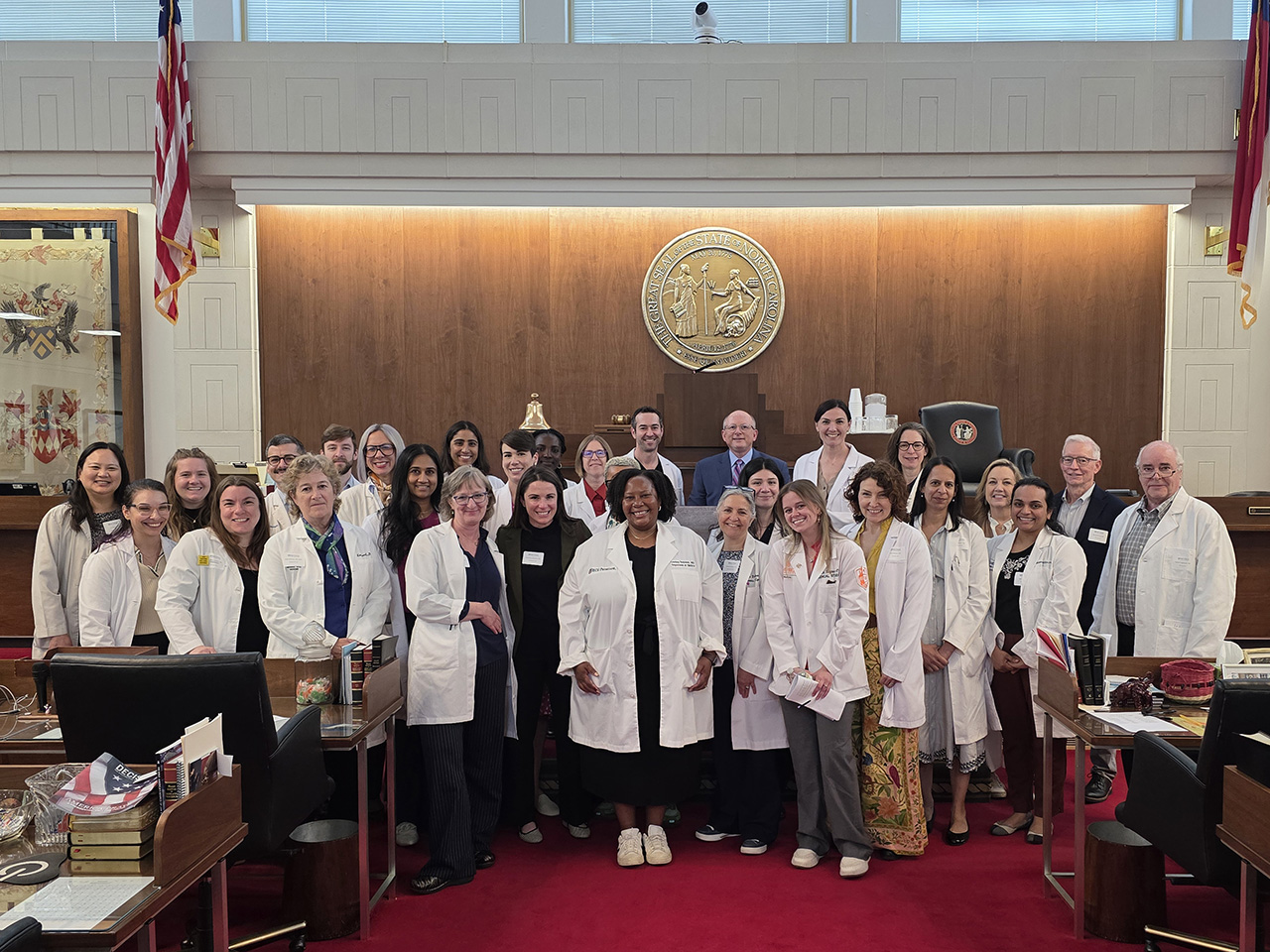
- Take part in the annual NCOGS White Coat Day. Learn more in the Events section about this year's WCD on May 13, 2026.
- Meet with your legislators. Contact lobbyist Rob Lamme to help facilitate meetings with your local representative or senator.
- Arrange a legislative briefing for you and your colleagues with Rob Lamme -- either virtual or in-person.
For more information on legislative advocacy and how you can be involved, contact Rob Lamme, [email protected].